On the night of 24 to 25 October, the clocks go back one hour at 03.00.
That Sunday the sun sets as early as 17.25, and from that moment the light at home is largely your own. Whatever burns, burns because you lit it.
It sounds like the end of something, but in the world of interiors it is actually the beginning. October is the month in which the home is allowed to play, and in which many enthusiasts are already getting ready for Halloween at the end of the month.
Two styles are running side by side this autumn. Japandi keeps things calm and clean, with few objects and plenty of space between them. Whimsical does exactly the opposite: round shapes, a touch of humour, objects that don't take themselves too seriously. What they share is that both revolve around light. October is the month in which that works on its own, because the dark takes away everything else and only shows what you light.
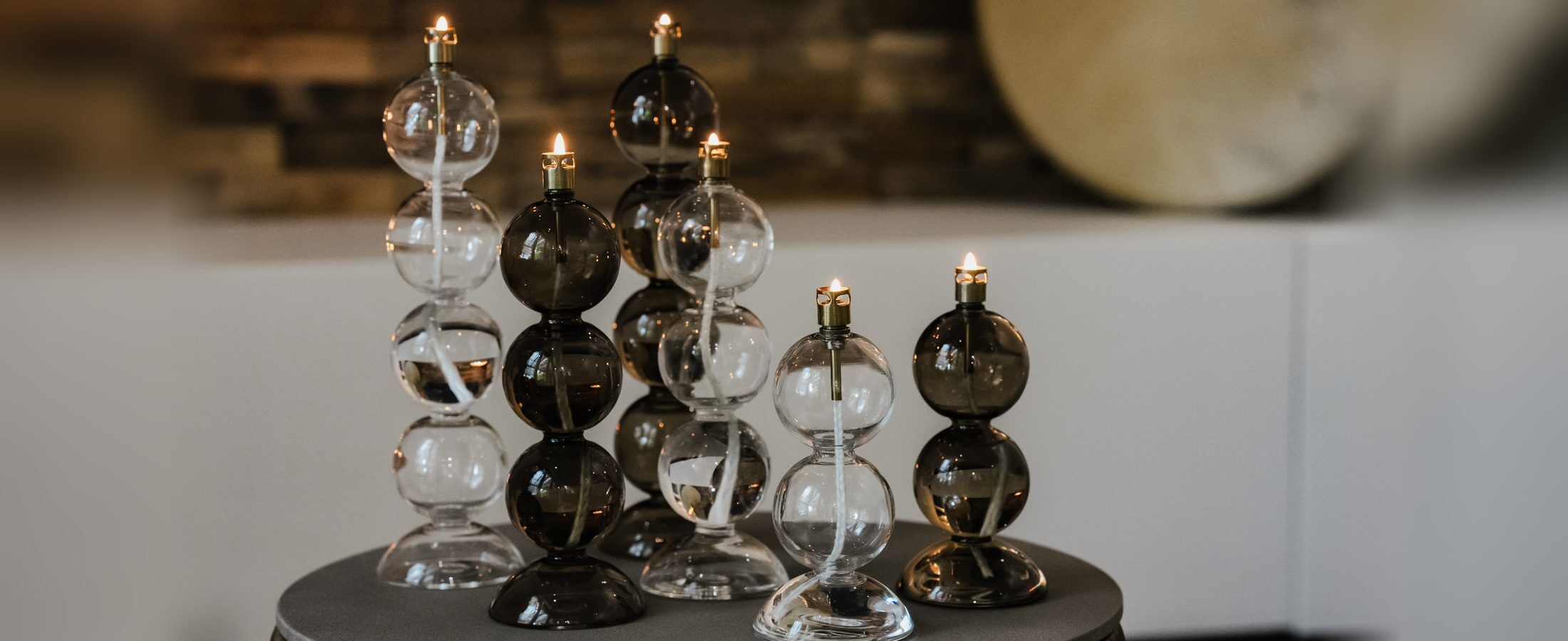
Collier works in both. The stacked glass spheres have something playful about them, especially when you mix sizes S, M and L instead of lining them up neatly. Put them in order and in a single finish, and it becomes calm enough for a japandi interior. In champagne it immediately takes on an autumn colour, while clear glass passes the light on completely.
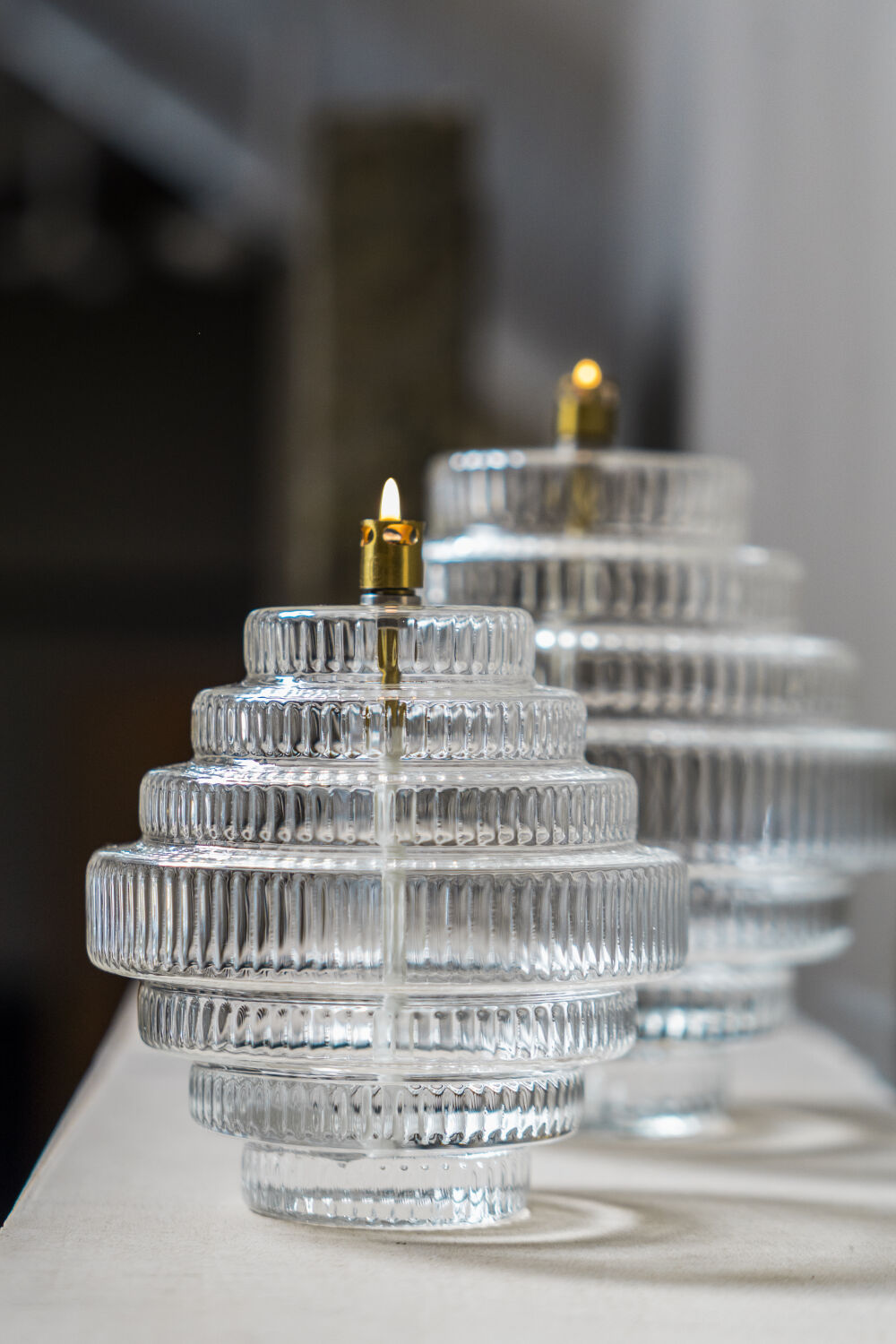
For Halloween, little else is needed. A few pumpkins in different sizes, dried flowers that have already turned brown, perhaps a branch growing the wrong way. Linea Glow lends itself well to this, because a windlight can be dressed again every season: moss and acorns inside in October, pumpkins alongside towards Halloween, pine greenery in December. The windlight stays put, only what's inside changes with it, and that is exactly what you want from decoration this month.
E-commerce & Content
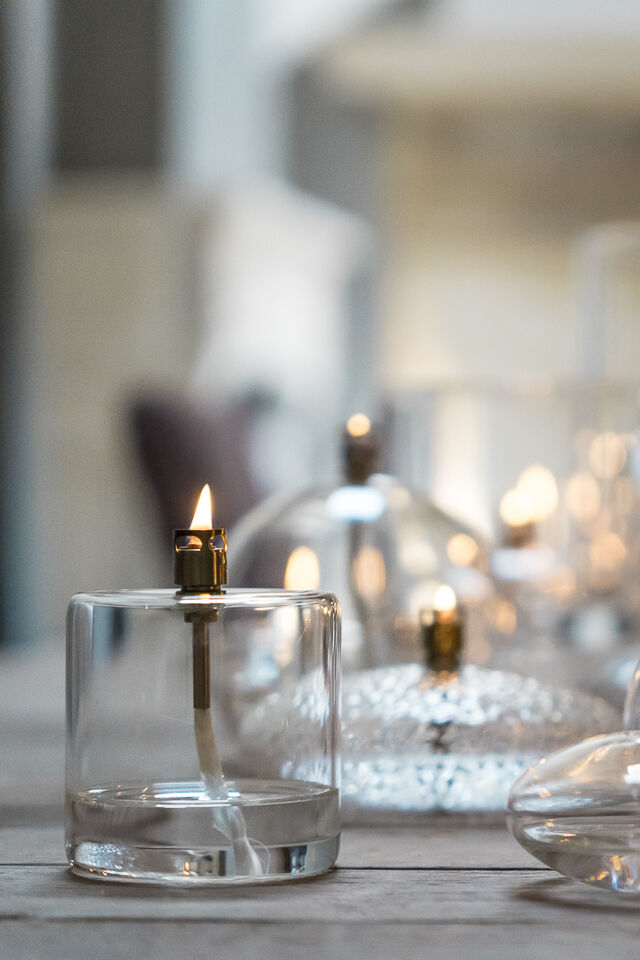
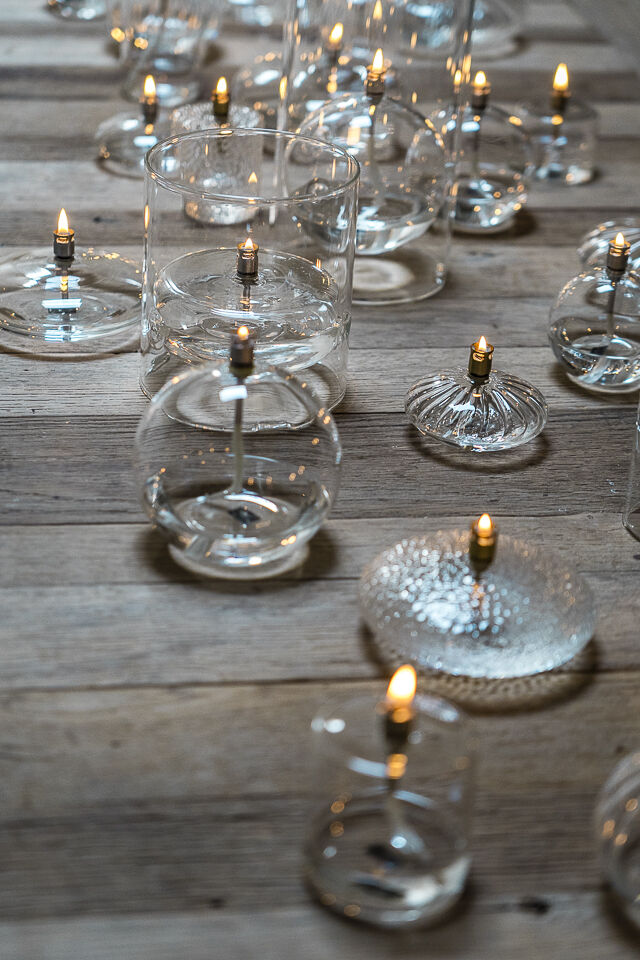
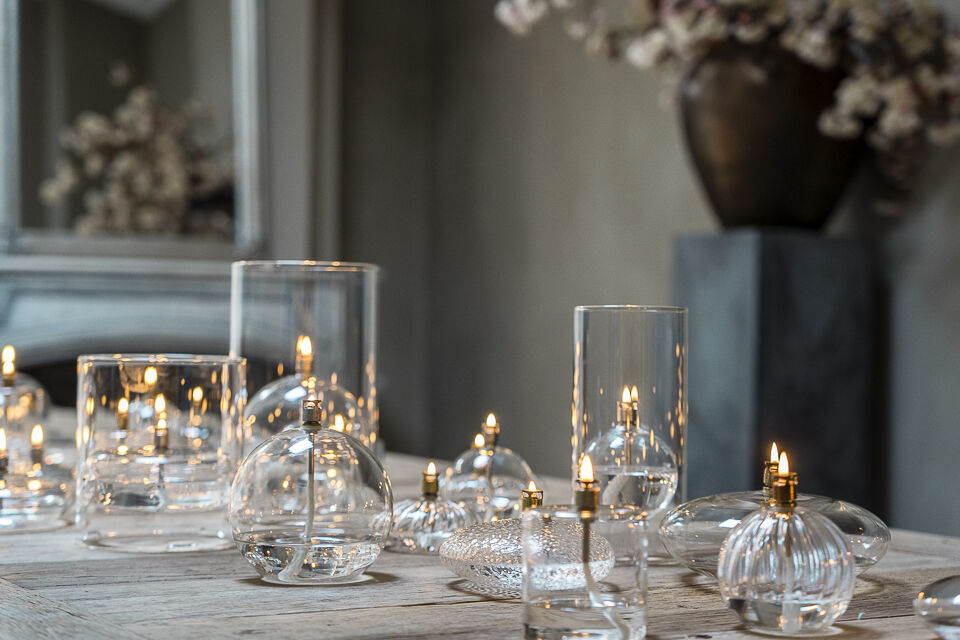
Bokeh is the effect in which points of light in the background dissolve into soft circles. It is the reason photos of ambient lighting look warm instead of flat, and all you need for it is a few flames and some distance.
This is how you do it:
Several small flames work better for this than one large light source, and that is exactly why a group of oil lamps at different heights does so well on camera. For a shop, that is directly useful: the same arrangement that works in the window display gives you the image you can post that same evening.
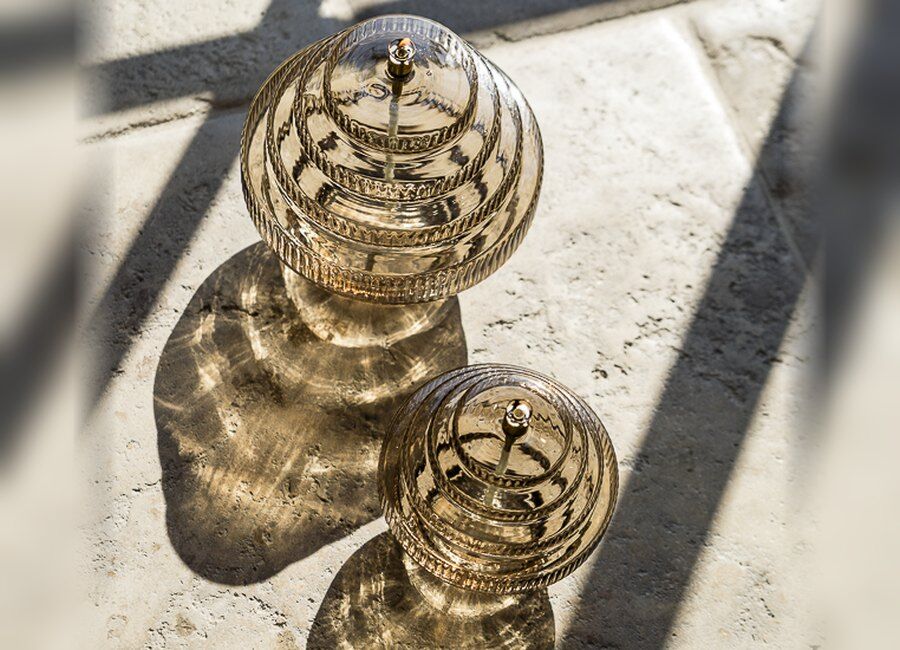
Glass doesn't hold light back, it passes it on. A flame behind glass becomes visible twice: as a flame and as a reflection in the wall of the lamp. The shape decides the rest, because stacked spheres refract light differently from a straight wall, and smoked glass softens where clear glass amplifies.
This month, work with differences in height rather than with more items. Place three lamps at three heights, with a pumpkin or a bowl in between, and leave the rest of the window dark. Passers-by then see only what is burning, and that is enough to make someone stop.
Warm regards,
Sanne